
In this age of information abundance, the timeless words of the Buddha continue to ring clear and true. For 2,500 years, these teachings were preserved by monastics, sometimes under extraordinarily difficult circumstances. The decision to commit the Tipiṭaka to writing was made in Sri Lanka in the 1st century BCE during a time of famine. The Tipitaka was inscribed onto palm leaves at the Aluvihare Rock Temple. Legend has it that the monks, weakened by hunger, would roll in the sand to keep themselves awake and energised; such was their determination to preserve these texts.
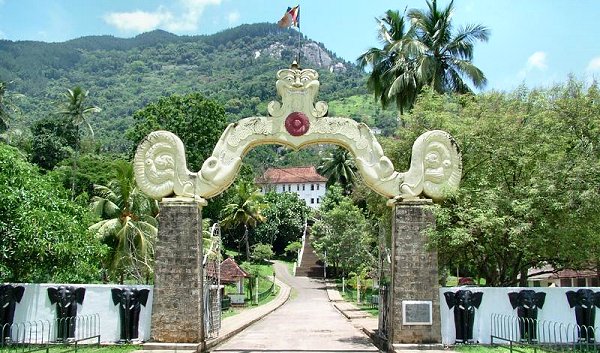
Millennia later, to be able to hold these scriptures in our hands is a rare moment in time. Rarer still is that they have been translated from ancient Pāli into English, a language so many of us can readily understand.
The Tipiṭaka was first translated into English by the Pali Text Society in the late 19th century. While this pioneering work was invaluable, these early renderings reflected the limitations of academics from an Abrahamic world. As knowledge of Buddhism deepened over the century that followed, new translations of the Pāli Canon emerged—clearer, more accessible, and grounded in both scholarship and practice.
In 2015, on a small island off Taiwan, Bhante Sujato spent three years re-translating the entire Sutta Piṭaka. His aim was simple yet profound: to use ordinary language that anyone could understand—whether Buddhist or not, native English speaker or not. In 2005, SuttaCentral.net was launched, making these translations freely available online, alongside parallel texts from other traditions and translations in multiple languages.
The Sutta Central Pirivena Project marked the first time that Bhante Sujato’s translation, together with a modern translation of the Vinaya by Bhikkhu Brahmali, was printed and distributed as a hardbound collection. As an expression of gratitude, 1,000 sets were gifted to pirivenas—monastic learning institutions—throughout Sri Lanka. Gratitude, because Sri Lanka was where the Pāli Canon was safeguarded by monastics for over 2,000 years.
An account of their momentous journey can be found on https://buddhistcouncil.org/suttacentral-pirivena-project/
This inspired Tom, and became a calling: to bring these translations into libraries, monasteries, prisons, schools, and homes across Australia and New Zealand.
To walk into a library in, say, Outback Australia and find these cloth-bound volumes resting on a shelf… it may be the day someone’s life changes.
Be part of this historic project.
Sabbadānaṃ dhammadānaṃ jināti
The gift of Dhamma is the greatest gift of all.
Ayya Upekkha